
Most homeowners don’t know if they need a repair or a full replacement. You might notice a leak or some damage, but it’s not always clear how serious it actually is.
Then someone shows up at your door telling you it needs to be replaced, without really showing you what’s going on. Now you’re left trying to figure out what’s real and what your roof actually needs.
What’s Actually Going On
Roofs don’t fail all at once. Most problems build up over time, and what you’re seeing on the surface doesn’t always tell the full story.
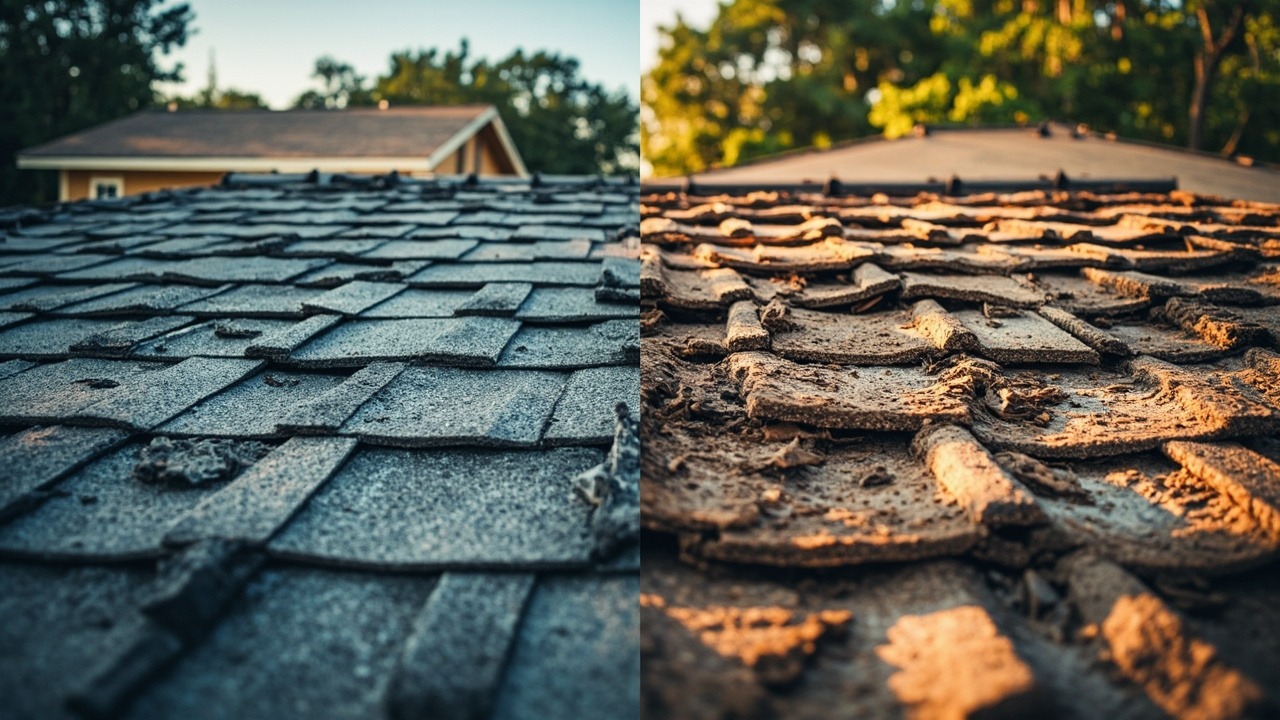
Two roofs can look very similar from the ground but have completely different conditions once you take a closer look. One might need a simple repair, while the other is starting to break down in multiple areas.
That’s why it’s common to hear different opinions. Without seeing everything clearly, people are often making a judgment based on limited information.
Signs You May Just Need a Repair
- Missing or damaged shingles
If you can see a few shingles out of place or missing, it’s often something that can be repaired without replacing the entire roof. - Damage in one specific area
When the issue is isolated—like around a vent, chimney, or one section of the roof—it’s usually a repair, not a full replacement. - Minor issues around roof features
Areas like vents, pipe jacks, or where something was installed on the roof are common spots for small problems to show up over time. - Early signs of wear on edges or trim
Small areas of wear don’t necessarily mean the whole roof is failing—they just need attention. - A single leak or ceiling stain
One water spot inside the home doesn’t automatically mean the entire roof needs to be replaced.

Signs You May Need a Replacement
- Multiple problem areas across the roof
If issues are showing up in several spots—not just one area—it can be a sign the roof as a whole is starting to fail. - Recurring leaks in the same place
If something has been repaired but keeps leaking, there may be a deeper issue that a simple fix won’t solve. - The roof is getting older
Over time, especially with the heat and storms we get in San Antonio, materials begin to break down and repairs become less effective. - Widespread wear and deterioration
If shingles are breaking down across large sections, it usually means the roof is nearing the end of its lifespan. - Multiple past repairs
When repairs start stacking up, it can reach a point where replacing the roof makes more sense.

What This Actually Means
This isn’t something you want to guess on. What you can see from the ground—or even from inside the house—doesn’t always tell the full story.
Two roofs can look very similar but need completely different solutions. What seems like a small issue could be more involved, and something that looks serious might only need a repair.
The goal is to actually see what’s going on and understand what your options are before making a decision.
What To Do Next
That’s why we start with a walkthrough.
We walk the roof with you and show you exactly what’s going on using photos and video, so you can see everything clearly without having to guess.
From there, you’ll get straightforward options and can decide what makes the most sense for your home.
